01 /
Start with nothing
Open an empty directory. By the end, you have a finished game that runs on your computer and in a browser.
A few evenings. A few hundred lines of Zig. One complete game.
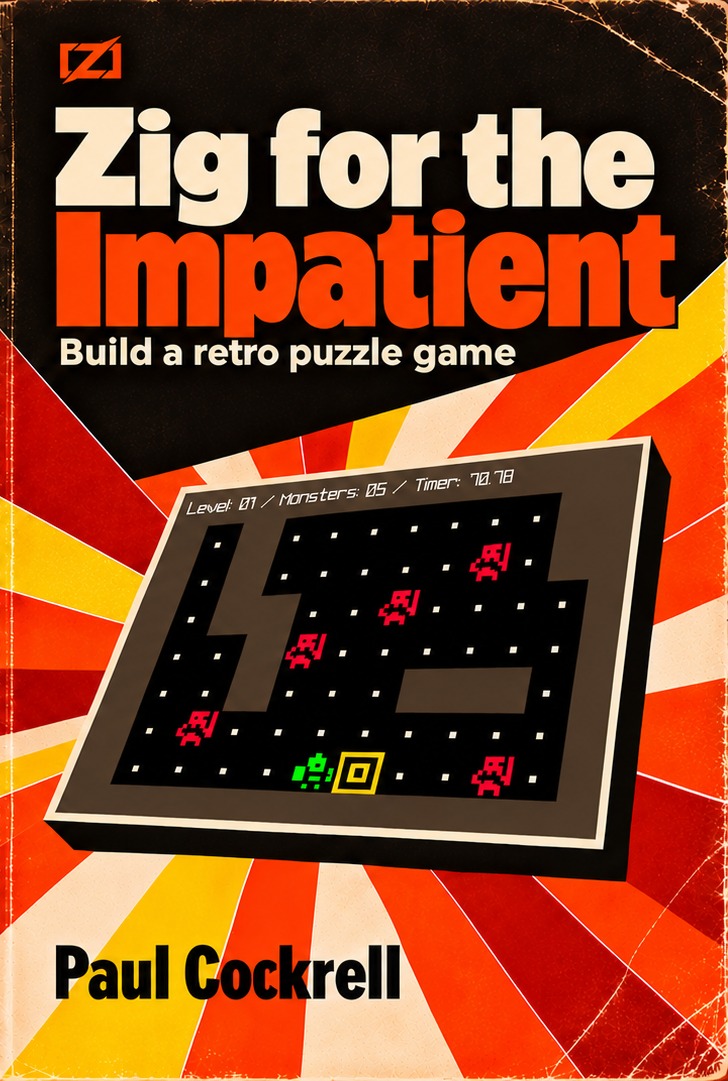
A programming book that gets straight to the interesting bit. Learn a modern systems programming language by building Dungeon Dash from an empty directory.
Approx. 97 pages · For people who already know how to programme
 A PROPER
This isn't a tour of every language feature. It's a focused, practical introduction to Zig through one small, satisfying project.
Open an empty directory. By the end, you have a finished game that runs on your computer and in a browser.
Meet structs, enums, pointers, memory management, error handling and testing when the game actually needs them.
Real movement, real monsters, real levels. Nothing theoretical for the sake of being theoretical.
An old-school puzzle game with a wonderfully simple rule: once you move, you keep sliding until something stops you.
Navigate the dungeon, outsmart the monsters, swap places with your teleporter and clear ten levels. It's compact, colourful and surprisingly tricky.
Play it now ↓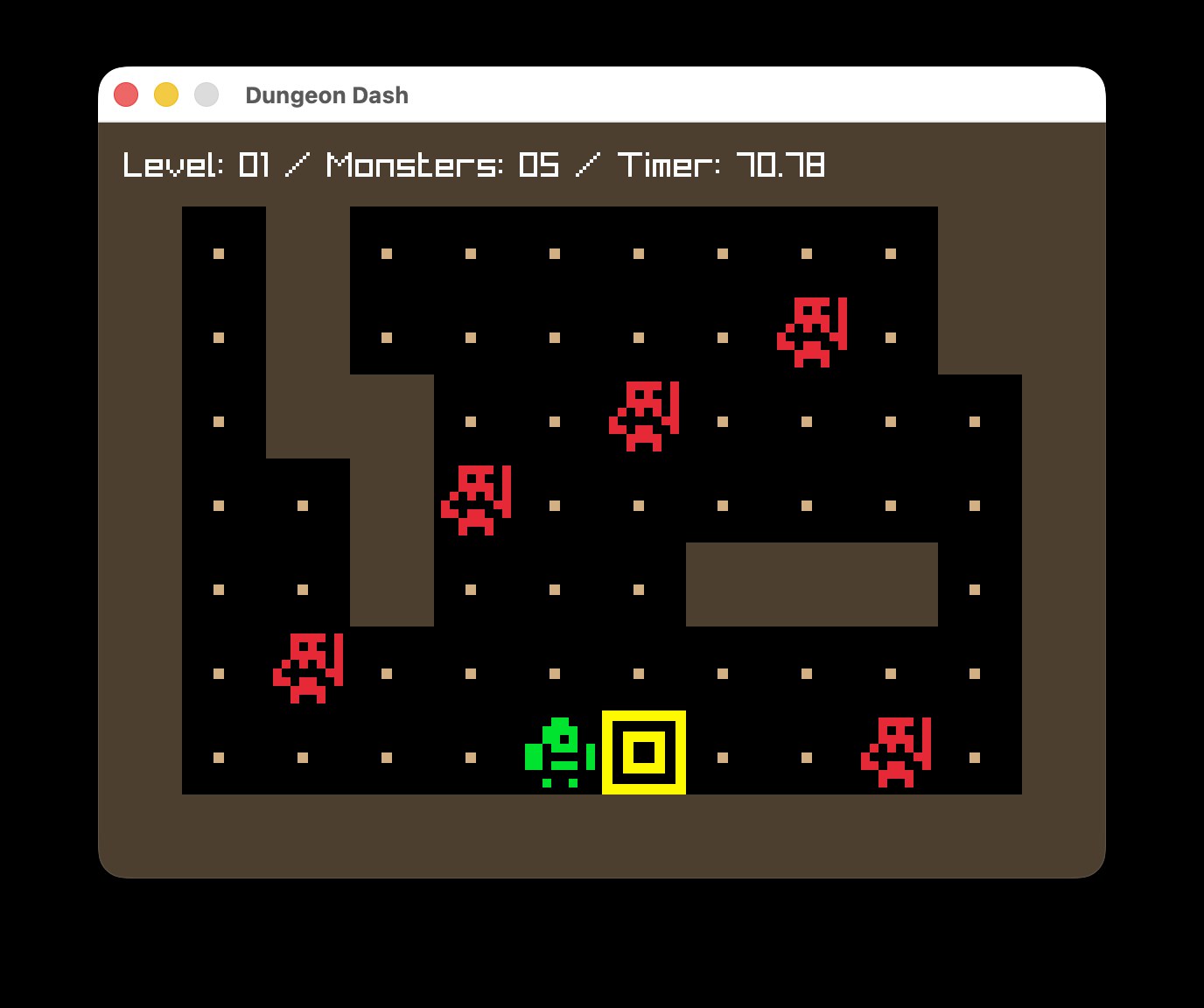
This is the actual game you'll build in the book — not a mock-up or a cut-down demo. Can you clear all ten levels?
Every chapter moves the same project forward. Simple ideas first, then better solutions as your game grows.
Set up Zig and raylib. Meet the game loop and draw your first dungeon.
Add a player, sliding movement, walls, monsters and teleportation.
Bring in your pixel sprites, multiple levels, game states and tests.
Build for WebAssembly and turn your project into something you can share.
You'll write Zig, build it, run it and see what happens. No need to know the language in advance — some existing programming experience is enough.
By the end you'll understand more than syntax. You'll have watched a working program grow from a tiny prototype into a complete project.
Sounds like my sort of thing ↗// The adventure begins here.
pub fn main() !void {
raylib.initWindow(
500, 500,
"Dungeon Dash",
);
defer raylib.closeWindow();
while (!raylib.windowShouldClose()) {
raylib.beginDrawing();
defer raylib.endDrawing();
}
}Pick up Zig for the Impatient, make a cup of tea and start building Dungeon Dash. A short book, a small game and plenty to learn along the way.
Approx. 97 pages · Royal paperback · Written by Paul Cockrell
Purchase link coming soonThe Bookvault purchase link will appear here once the book is available. No payment is taken on this website.
Not at all. The book assumes you already know how to programme, but it introduces Zig as you build the game.
No — and that's deliberate. It's a focused, project-based introduction for programmers who prefer to learn by doing.
A complete retro puzzle game, Dungeon Dash, including ten levels, sprites and a web build you can share.
Yes. The featured edition is a paperback, printed on demand through Bookvault.